Gas Engine vs Fuel Cell: Comparison for Data Center Power Solutions
As data centers face increasing power shortages driven by AI and cloud computing demands, both gas engines and fuel cells have emerged as critical solutions for backup and primary power generation. While gas engines offer proven reliability and fast response times, fuel cells present a cleaner, more efficient alternative with lower emissions. This article examines the key differences between gas engines and fuel cells to help data center operators choose the right technology for their specific power needs and sustainability goals.
Gas Engine
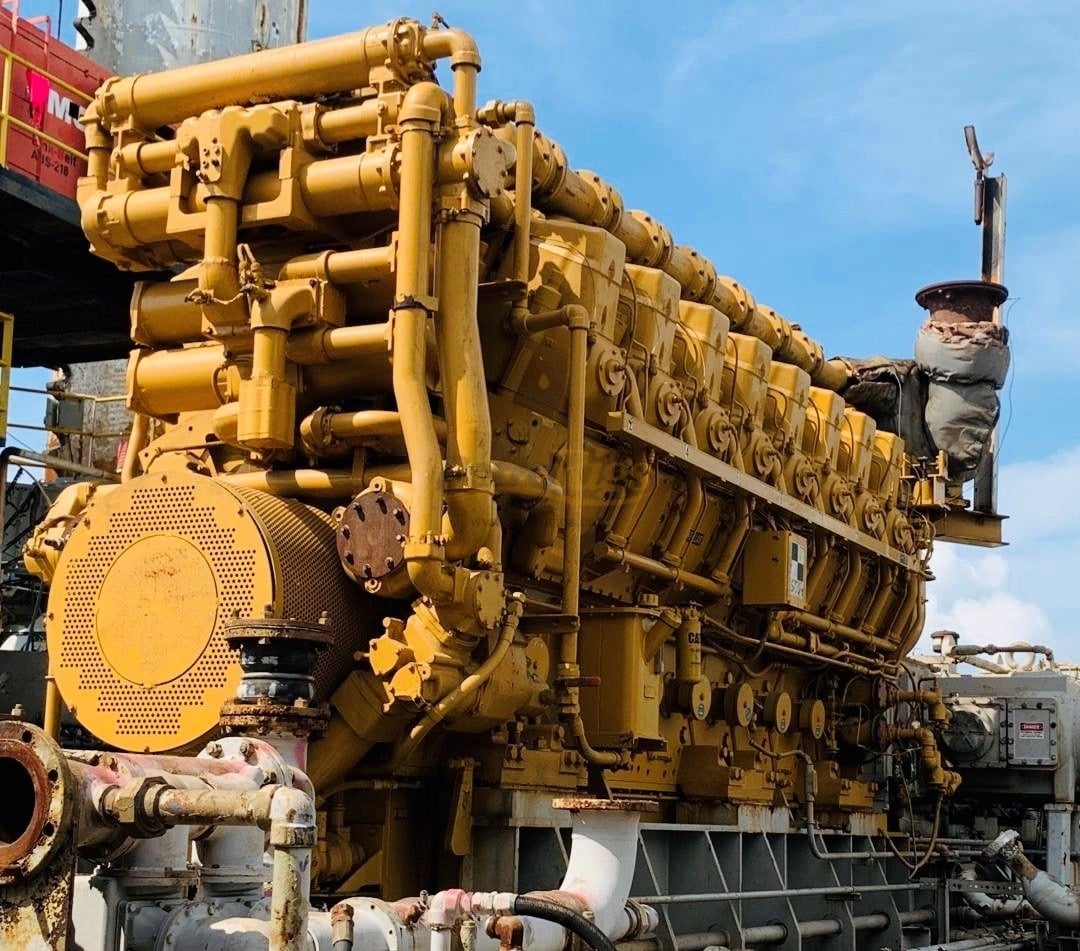
A gas engine is an internal combustion engine that operates on the Otto or Diesel cycle, converting gaseous fuels directly into mechanical energy through controlled combustion within cylinders. Unlike fuel cells, gas engines use reciprocating pistons and combustion processes.
The operational principle involves compressing a fuel-air mixture in cylinders, igniting it to create rapid expansion, and converting this linear motion into rotational energy through a crankshaft. Each engine unit connects to its own shaft, which drives a dedicated electrical generator. In data center applications, multiple gas engine units are often deployed in parallel configurations to create modular generating sets with high redundancy and operational flexibility.
Fuel Cell
A fuel cell is an electrochemical device that converts chemical energy from fuel directly into electrical energy through an electrochemical reaction, without combustion. The most common types for data center applications are Proton Exchange Membrane Fuel Cells (PEMFC) and Solid Oxide Fuel Cells (SOFC).
In a fuel cell, hydrogen (or a hydrogen-rich fuel like natural gas) is supplied to the anode, while oxygen from air is supplied to the cathode. An electrolyte between the electrodes facilitates ion transport while blocking electron flow, forcing electrons through an external circuit to generate electricity. The only byproducts are water and heat, making fuel cells extremely clean.
PEMFC operates at lower temperatures (60-80°C) with quick startup times, making them ideal for backup power applications. SOFC operates at high temperatures (500-1000°C), achieving higher efficiency (50-60%) and fuel flexibility, suitable for continuous baseload power generation.
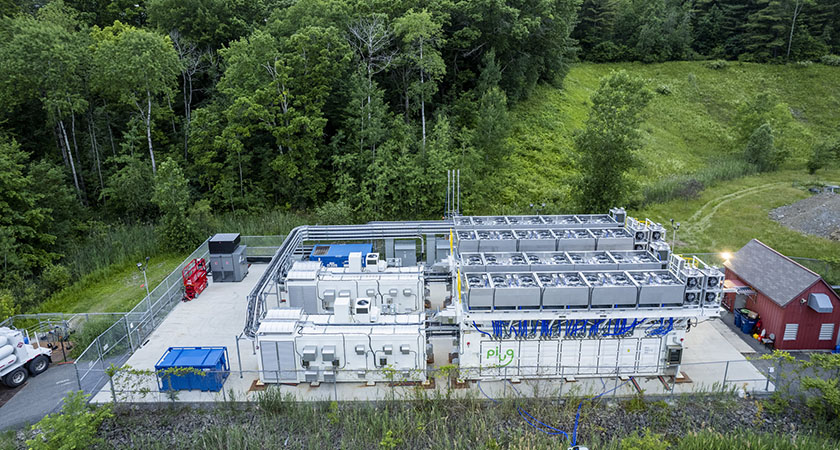
Fuel cells are modular and scalable, with units ranging from 100 kW to several MW. They can be stacked vertically to maximize power density—up to 100 MW per acre compared to 50 MW per acre for combustion-based systems. This makes them particularly attractive for data centers in dense urban areas or expensive real estate markets.
Gas Engine VS. Fuel Cell
The following factors show the main differences between gas engines and fuel cells when considering data center power applications:
Electrical Efficiency
- Gas Engine: 48.5% - 49%
- Fuel Cell (SOFC): 50% - 60%
- Fuel Cell (PEMFC): 40% - 50%
Total CHP Efficiency
- Gas Engine: 63.5% - 77%
- Fuel Cell (SOFC): 80% - 90% (when capturing waste heat)
- Fuel Cell (PEMFC): 80% - 85% (with heat recovery)
Startup Time
- Gas Engine: 10 minutes (fast response)
- Fuel Cell (PEMFC): < 5 minutes (very fast)
- Fuel Cell (SOFC): 25 minutes ~ 12 hours (slower due to thermal requirements, Depned on technology)
Load Following Capability
- Gas Engine: Excellent - can ramp up/down quickly with mechanical responsiveness (seconds to minutes)
- Fuel Cell (PEMFC): Excellent - responds instantly to load changes (solid-state device with low operating temperature)
- Fuel Cell (SOFC - Traditional): Poor - thermal response time in minutes due to high operating temperature (600-1000°C), making rapid load following difficult.(can achieve rapid response when paired with supercapcitors or batteries for ramping support)
Emissions (NOx, SOx, PM)
- Gas Engine: ~45-57 ppm NOx (with lean-burn technology); produces some SOx and particulate matter
- Fuel Cell (SOFC with natural gas): Negligible NOx, SOx, CO, and particulate matter (~70 dBA noise level)
- Fuel Cell (hydrogen): Zero emissions at point of use - only water and heat
CO2 Emissions
- Gas Engine: Moderate (high efficiency reduces emissions vs. diesel)
- Fuel Cell (natural gas): 50% lower than combustion engines
- Fuel Cell (green hydrogen): Near-zero lifecycle emissions
Noise Level
- Gas Engine: Moderate to high (requires noise containment in urban areas)
- Fuel Cell: Very low (~70 dBA) - suitable for densely populated environments
Vibration
- Gas Engine: Low to moderate (reciprocating motion creates vibration)
- Fuel Cell: Virtually none (no moving parts)
Maintenance Requirements
- Gas Engine: Moderate - oil changes every few hundred hours, major overhaul every 30,000-60,000 hours, engine rebuild after a few years
- Fuel Cell: Low - no oil changes, but fuel cell stacks require replacement every 5-7 years (40,000-60,000 hours); hot-swappable modules as small as 50 kW allow replacement without system shutdown (BE SOFC)
- Fuel Cell: Very low - no oil changes, hot-swappable modules as small as 50 kW without system shutdown
Machine Size & Power Density
- Gas Engine: 0.3-20 MW per unit; ~50 MW per acre
- Fuel Cell: 50 kW - several MW per module; up to 100 MW per acre (vertical stacking capability)
Installation Footprint by Capacity
Capacity RangeSpace AdvantageRemarks
Example: 300 kW Installation
- Fuel Cell: ~10-20 m² (half shipping container size, incluidng Balance of Plant it will be around 300 m² )
- Gas Engine: ~50-70 m² (including auxiliaries like cooling, exhaust, oil systems)
- Space advantage: Fuel cells are 5-7x more compact at small capacities
Capacity RangeSpace AdvantageRemarks
| < 1 MW | Fuel Cell | 5-7x smaller footprint, containerized |
| 1-20 MW | Fuel Cell | Superior power density, but gas engines offer lower CAPEX and faster startup |
| 20-100 MW | Situational | Gas engines offer faster deployment and proven reliability; fuel cells provide higher efficiency and lower emissions |
| > 100 MW | Fuel Cell | Up to 100 MW/acre vs 50 MW/acre for engines, easier urban permitting |
Fuel Flexibility
- Gas Engine: Natural gas, biogas, propane, low-calorific gases
- Fuel Cell (SOFC): Natural gas, biogas, propane, hydrogen, biofuels (high fuel flexibility)
- Fuel Cell (PEMFC): Pure hydrogen or hydrogen-rich reformate
Installation & Deployment Time
- Gas Engine: 12-18 months (including site preparation, permits, and commissioning)
- Fuel Cell: 3-4 months for 50 MW; can be containerized and pre-assembled for rapid deployment
Reliability & Uptime
- Gas Engine: High reliability with established maintenance protocols; N+1 redundancy common
- Fuel Cell: Very high reliability (no mechanical failures); but N+1 redundancy common (For Data Center)
Capital Cost (CAPEX)
- Gas Engine: Lower initial cost per kW ($800-1,200/kW)
- Fuel Cell: Higher initial cost per kW ($2,000-4,000/kW), but costs decreasing with scale
Operating Cost (OPEX)
- Gas Engine: Moderate (fuel consumption, regular maintenance, oil changes)
- Fuel Cell: Lower long-term costs (higher efficiency = less fuel, minimal maintenance)
Suitability for Data Center Applications
Gas Engine strengths:
- Fast startup for backup power (< 10 minutes)
- Lower capital cost
- Mature, proven technology
- Good for < 50 MW applications
- Excellent partial load efficiency
Fuel Cell strengths:
- Highest electrical efficiency (up to 60%)
- Near-silent operation (urban data centers)
- Minimal emissions (meets stringent environmental regulations)
- Superior power density (limited land availability)
- Can operate continuously without refueling (connected to gas grid)
- Pathway to zero emissions with green hydrogen